

By Dr Andy Harrod – Lecturer in Counselling, Psychotherapy and Applied Social Sciences School of Health in Social Science, University of Edinburgh
I’m sitting quietly in the summer house, overlooking a patchwork of wild flowers, grasses, and trees, beyond are fields, gently sloping up to the horizon. I’ve just completed another engaging and insightful interview with a participant. Another participant full of passion, energy and enthusiasm for Grow Your Own, particularly the safe space co-created between the facilitator, participants, and nature, both within and beyond the garden. And there they appear, the deer, that many have mentioned to me, quietly running through the long grass. An unexpected encounter that brings a smile to my face. I’m quickly understanding why this garden is so special to so many service users.
Grow Your Own is a therapeutic gardening project at Guild Lodge, which is Lancashire and South Cumbria NHS Foundation Trust’s secure mental health inpatient hospital. Grow Your Own began in 2013, with the mission to provide opportunities for service users to develop horticultural sills, have meaningful social interactions, increase their physical activity, and develop a productive and beautiful gardening space. Activities involve flower and vegetable growing, craft activities, construction and woodwork, chicken care, as well as plant and craft sales. Tree planting has also been a core activity over the past 13 years, including the planting of 365 NHS Forest trees in 2014. Service users also have the opportunity to attend various shows and markets, as well as complete formal qualifications in horticulture.
In the summer of 2025, a qualitative evaluation was undertaken to explore and understand the standard of care Grow Your Own provides service users. The evaluation, primarily involving interviews, involved 46 participants and comprised of a range of service users (15), Grow Your Own staff (9), Ward and Estates staff (16), and volunteers (6). The participants’ voices highlighted five key aspects, nature, social interactions, meaningful activities, service users’ choice and motivation, and Grow Your Own staff’s non-judgemental, empathic, caring and understanding attitude.

Nature
“When I first came, when I found out that they had chickens and geese, that made me so much happier because I knew that there was animals there. I just love animals.”
(Frank, Service User)
Participants reported that the nature-full setting of the garden provides a calm and tranquil sensory setting, which provides them with opportunities for respite and reflection. Participants’ encounters with nature also supports participants’ sense of being part of something bigger than themselves and the hospital. This occurrs through the growing of individual plants, as well as through the creation of habitats for insects, birds and wildlife. These acts of care support the service users’ wellbeing through improving their sense of purpose and belonging.
“It’s nice that we’ve given back something to nature, really, which before there wasn’t really a lot down here.”
(Gordon, Grow Your Own Staff (Former Service User))

Social interactions
“I think one of the things that surprised me was the community, I am quite a loner and I live on my own, how much I’ve enjoyed being part of this community”
(Holly, Volunteer)
Participants highlighted social interactions were easy-going, full of jokes and laughter, and focused on everyday topics, but could also involve peer support around personal experiences of medications, of progress and recovery. These social interactions are significant in supporting participants sense of belonging at Grow Your Own, with participants noting they feel part of a “team” and “family”. Specifically, service users discussed how their words and conversations were not “jumped on”, that the staff at Grow Your Own did not “overreact” if they mentioned having a bad day or personal difficulties. Participants raised that both the ease of talking and non-reaction was in contrast to being on the ward, where service users feel guarded and constrained by the cramped and intense spaces, and the sense of being observed twenty-four-seven.
“They do express their thoughts and feelings and they’re more open here as well. When you’re on the ward they seem to be more caged.”
(Patrick, Healthcare Professional)
Meaningful activities
“I really like planting plants and seeing them grow because it’s like Oh my god, I’ve achieved that, that plant was that little and it’s up here [points up]. I have really achieved that.”
(Daisy, Service User)
Participants highlighted that through participating in a range of activities, including planting seedlings, creating crafts, landscaping, woodwork, and contributing to show gardens, the service users gain multiple benefits. The participants’ active engagement with the activities opens up opportunities for them to learn about themselves, develop new skills and knowledge, which is empowering for the participants. Benefits includes service users developing ways to support their emotional regulation, improvements to their physical health, and being trusted with restricted items and developing responsibility. Through, the activities, participants become included at Grow Your Own, which is enhanced through participation at the Southport Flower Show, Longridge Show, and various festive markets. These shows and markets are the accumulation of common goals, where the public interaction and appreciation supports participants’ confidence, self-worth, sense of achievement and belonging
“When they get to those events and they see people looking at what they’ve produced, they really do enjoy it. So that being part of the community, I think, is a big, big thing. And having those goals to work towards.”
(Aisling, Forensic Community Practitioner)

Service users’ choice and motivation to participate
“Yes, he was able to be himself down here, because on the ward, a lot of them are frightened of ever saying no, because they’ll get into trouble. At Grow Your Own, you can say no, you can say yes, you can say I might do, I might not do. You’re not going to be judged.”
(Reece, Volunteer)
Service users highlighted the role of choice and motivation in their participation at Grow Your Own, especially in relation to feeling they had no choice in being at Guild Lodge and how it was more difficult to make their own decisions regarding their treatment. Meanwhile, at Grow Your Own service users are free to try different activities and explore the garden spaces in their chosen way, which supports their autonomy. The service users’ increased sense of agency supports them in developing confidence, in building up accomplishments, and led to shifts in their identity away from a ‘mentally ill inpatient’ to a ‘normal human being’. This shift in their identity is supported by an increase in their sense of belonging as they are accepted as they are and valued by fellow service users, volunteers and staff. Participants’ re-evaluation of their identity can reduce their mental distress as their thoughts and actions become more aligned and supports them to flourish
“You’ll shape yourself, because you’ll find yourself”
(Rebecca, Grow Your Own Staff)
Personal and relational qualities of the Grow Your Own staff
“I think she [manager] sees people for who they are as individuals and what they’re able to bring to this space because obviously everybody’s different.”
(Ayana, Consultant Nurse)
The role of the manager of Grow Your Own was particularly highlighted by participants as being key to the success of Grow Your Own. Participants discussed her “caring”, “considerate”, “kind”, “supportive”, “encouraging”, “non-judgemental” and “empathic” attitude, which supports service users to settle in and take part in the activities. These personal and relational qualities have been shown to be essential in co-creating therapeutic environments, which facilitate participants to engage at their own pace and ways, which in turn supports participants to develop their identity and wellbeing practices. This occurs because service users are not required to engage or behave in specific ways at Grow Your Own, but have the freedom to choose how they participate. This beneficially impacts their sense of worth and identity, as they are accepted as they are, which also improves their mental wellbeing. This therapeutic environment is supported by the other staff at Grow Your Own, many of whom are former service users, whose lived experience of being an inpatient at Guild Lodge can help them in their roles. These roles also provide personal satisfaction and helps them to maintain and enhance their own wellbeing.
“I’m feeling satisfied, I’m doing my job right, being there for someone in need, who needs another chance in life just to get it right, then that gives me a lot of satisfaction and I’m very proud.”
(Rosie, Grow Your Own Staff (Former Service User))
Together these five factors co-create a therapeutic environment which is relaxed, peaceful, non-judgemental and caring, which provides a safe place for participants to engage and interact at their pace and in their ways. This facilitates improvements in service users’ self-confidence and self-worth, supporting a revaluation of their identity, leading to improved actions, which support their short- and long-term mental wellbeing. Short-term benefits include service users reporting being able to have respite from the “noisy” and “crowded” wards, which supported them to feel relaxed and return in a more positive mood. Longer-term impacts include service users’ highlighting the formation of improved wellbeing practices through having new experiences and becoming aware of harmful habits.
Amongst the success of Grow Your Own, there were also two key areas that require further consideration, firstly staff shortages on the wards, which could lead to escorts for service users being cancelled. This caused disruptions to service users’ routines, which could be particularly difficult at weekends, when there were fewer activities available than during the week. Secondly, further research is required to understand service users’ experiences on the wards. This is because participants highlighted that life on the wards was difficult and detrimental to their wellbeing, and their experiences were often in sharp contrast to the beneficial experiences at Grow Your Own. These experiences could be impacting the service users’ recovery and mental health. As such, it is important to understand how service users’ experiences on the ward interact with their experiences at Grow Your Own, especially, considering how valued Grow Your own is by the service users and staff at Guild Lodge.
“Gardening is good for a lot of people with mental health. I’m on medication for my mental health, but I think there’s other things that do help as much, if not more sometimes. I think gardening, especially with myself and a lot of people, it does help a great deal.”
(Gordon, Grow Your Own Staff (Former Service User))
* All names used in the blog are pseudonyms and this blog is informed by the report produced for Grow Your Own.
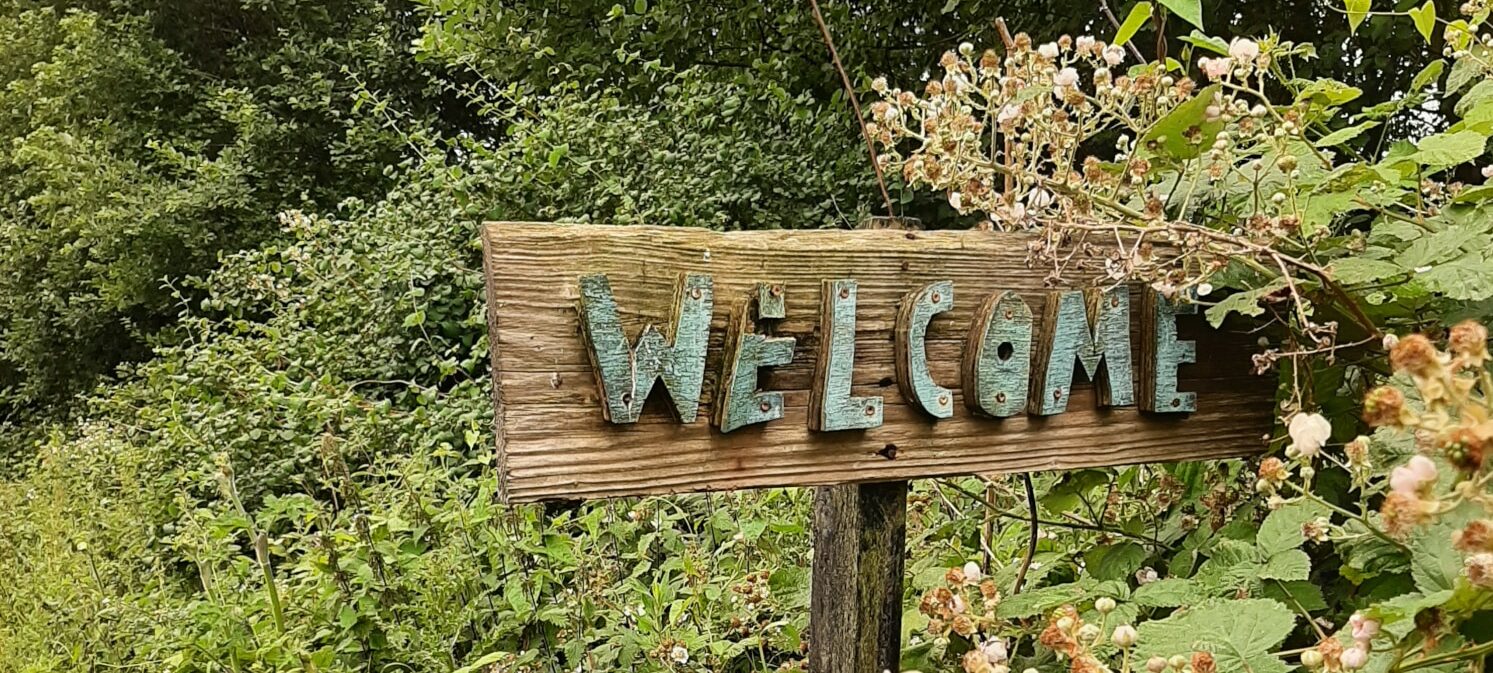
Banner image: Grow Your Own, Guild Park. All rights reserved.